
Enlarged Prostate
Expert care to improve urinary flow and daily comfort.
The Role of the Prostate
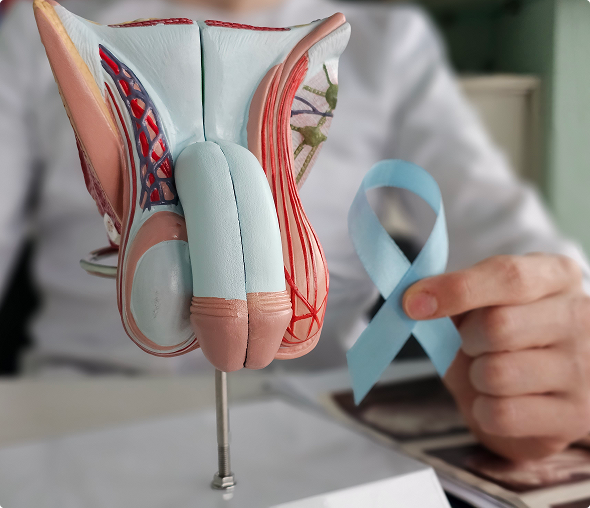
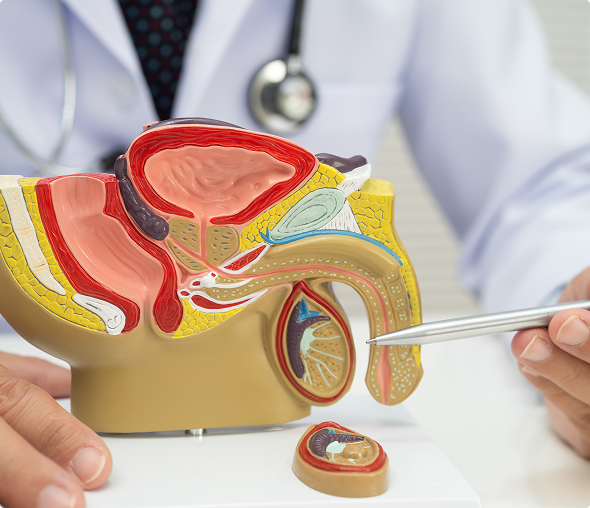
The prostate is a golf ball-sized gland located under the bladder and in front of the rectum in men. While all of its functions are not known, the prostate adds fluid and nutrients to sperm to produce semen and allow the sperm to move more effectively.
Why the Prostate Enlarges
An enlarged prostate, known as benign prostatic hyperplasia or BPH, is a common condition that occurs as men age. BPH causes the prostate to press against the urethra, which results in urinary problems. It is believed that an enlarged prostate may be due to an excess of certain hormones in the body.
Symptoms of an
Enlarged Prostate
As men mature, the prostate goes through two main growth phases: first during puberty and again around the age of 25. This second growth phase may continue for many years and can eventually lead to an enlarged prostate later in life. In fact, more than 50 percent of men age 50 and older are affected by this condition. As the prostate expands, more and more urinary problems develop. Men with an enlarged prostate may experience the following:
Difficulty starting to urinate.
Inability to completely empty the bladder.
Slowed urine stream.
Frequent urination.
Sudden urge to urinate.
Complications of Untreated BPH
As symptoms progress, patients may also develop bladder stones, blood in the urine, or a bladder infection. This condition will continue to worsen if left untreated.

Diagnosis of an
Enlarged Prostate
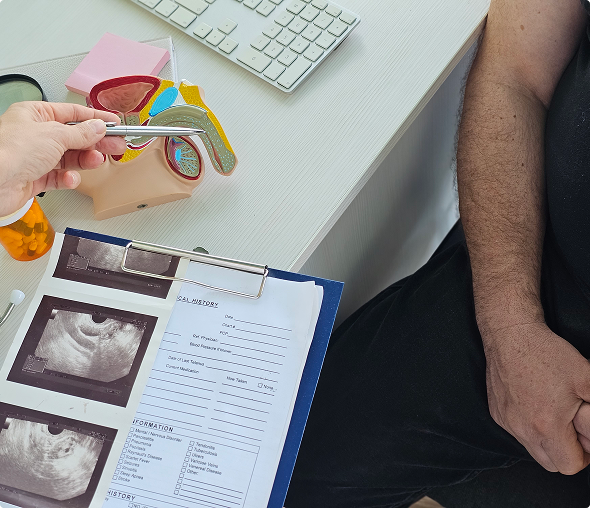
An enlarged prostate is diagnosed after a thorough physical examination by a doctor, which may also include the following additional tests:
Digital rectal exam.
Urinalysis.
Prostate-specific antigen test, or PSA.
Cystoscopy.
A series of urodynamic tests may also be performed to evaluate the function of the bladder and the urinary tract.
Non-Surgical Treatment of an Enlarged Prostate
Treatment for an enlarged prostate may vary depending on the severity of the condition. Patients with mild symptoms may only need to monitor their condition for signs that it is worsening, while more severe cases may require medication to inhibit hormone production or relax the muscle in the prostate. Two common types of medication for an enlarged prostate include:
Alpha blockers relax the muscles in the bladder and prostate. They can help improve urine flow and reduce the risk of bladder obstruction. They are often prescribed to men with smaller prostates.
Surgical Treatment of an Enlarged Prostate
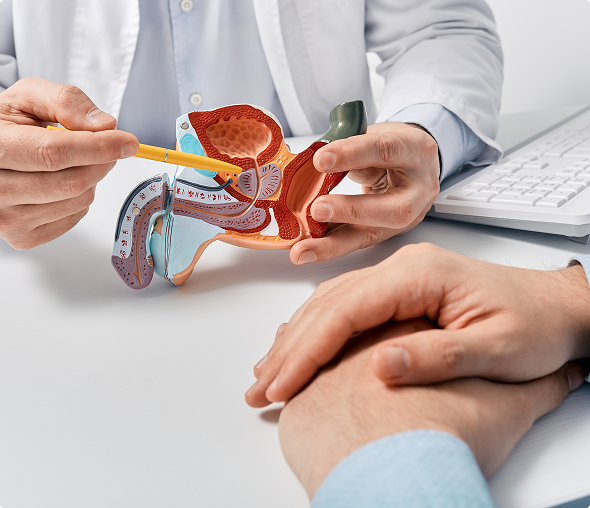
In some cases, surgery may be required to remove the prostate tissue that is blocking the flow of urine. There are several different surgical procedures available for treating an enlarged prostate, including:
Transurethral resection of the prostate, or TURP, is a surgery used to treat an enlarged prostate with no external incisions. A resectoscope is inserted through the urethra, and tissue is cut away from the enlarged prostate.
Open Surgery
In the case of a significantly enlarged prostate, open surgery is usually recommended. An incision is made in the lower abdomen, and the interior of the prostate is removed, leaving the outer lining of compressed normal prostate tissue. This surgery results in the greatest increase in urinary flow of all treatment techniques.
Living Well After BPH Surgery
Surgery for an enlarged prostate usually provides effective results for at least 15 years. Patients should continue to have rectal and prostate exams once a year and should see their doctor at the first sign of recurring symptoms. There is a wide range of treatment options available for an enlarged prostate, and if treated promptly and effectively, patients can live relatively normal lives.